[Case 03]
Designing a Purpose-Driven Travel Platform
Travel

Project Description
Trip Hive is more than just a travel platform. It’s a community that connects hearts, cultures, and purpose. Designed to help travelers discover authentic destinations, plan meaningful journeys, book with confidence, and share experiences, Trip Hive stands out by combining seamless functionality with a mission for positive impact. As the UX/UI designer, I was responsible for shaping an experience that is not only user-friendly but also aligned with the platform’s values of sustainability, authentic connections, community empowerment, and trust.
Timeline
From explorations to final designs in 2 months while working with multiple projects at the same time.
Background
Traditional travel planning is fragmented. Travelers look for inspiration on blogs or Instagram, book across multiple websites, organize itineraries in spreadsheets, and share plans through chats. This creates confusion, inefficiency, and frustration. Trip Hive solves this by unifying the process: offering curated discovery, easy itinerary planning, seamless booking, and the ability to share journeys with friends or the wider community. The platform also ensures every journey contributes positively by prioritizing sustainability, genuine relationships, community empowerment, and safety.
[Persona]
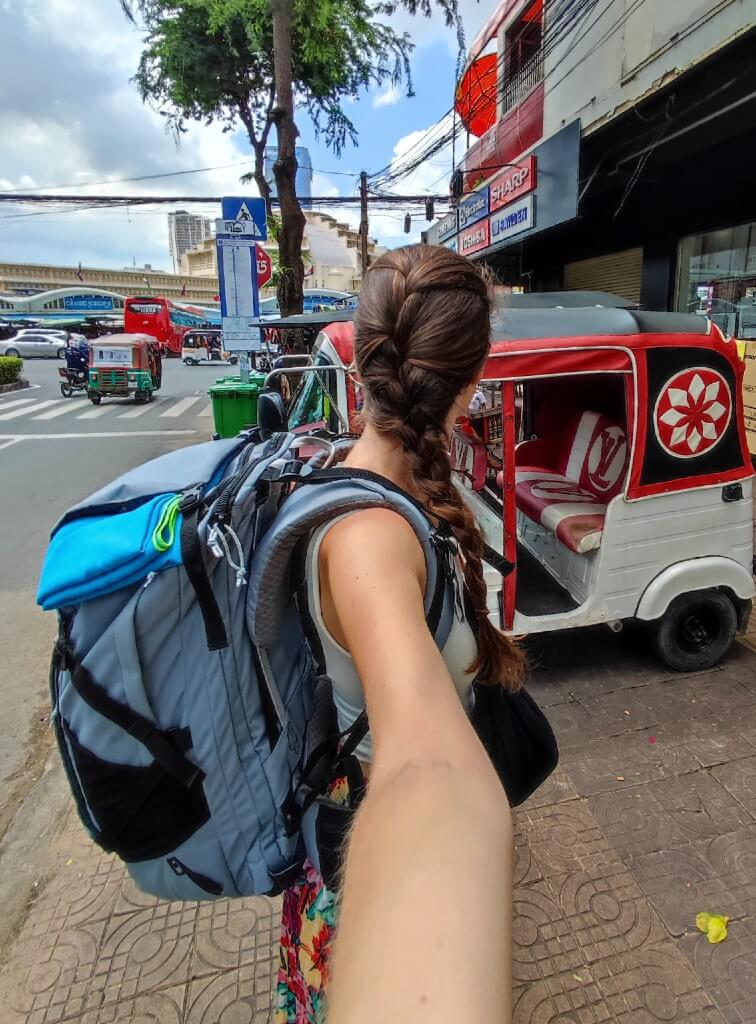
Name: Sara Ben Jemaa
Age: 29
Location: La Marsa, Tunisia
Occupation: Marketing Specialist
Gender: Female
Goal
Discover new destinations with trustworthy recommendations
Plan and organize trips without using multiple tools
Book experiences directly in one platform
Share her trip with friends or community members
Frustrations
Generic and impersonal booking platforms.
Switching between multiple tools for one trip.
Lack of transparency on how tourism supports local communities.
No simple way to share detailed itineraries.
[Process]
01.
User Research
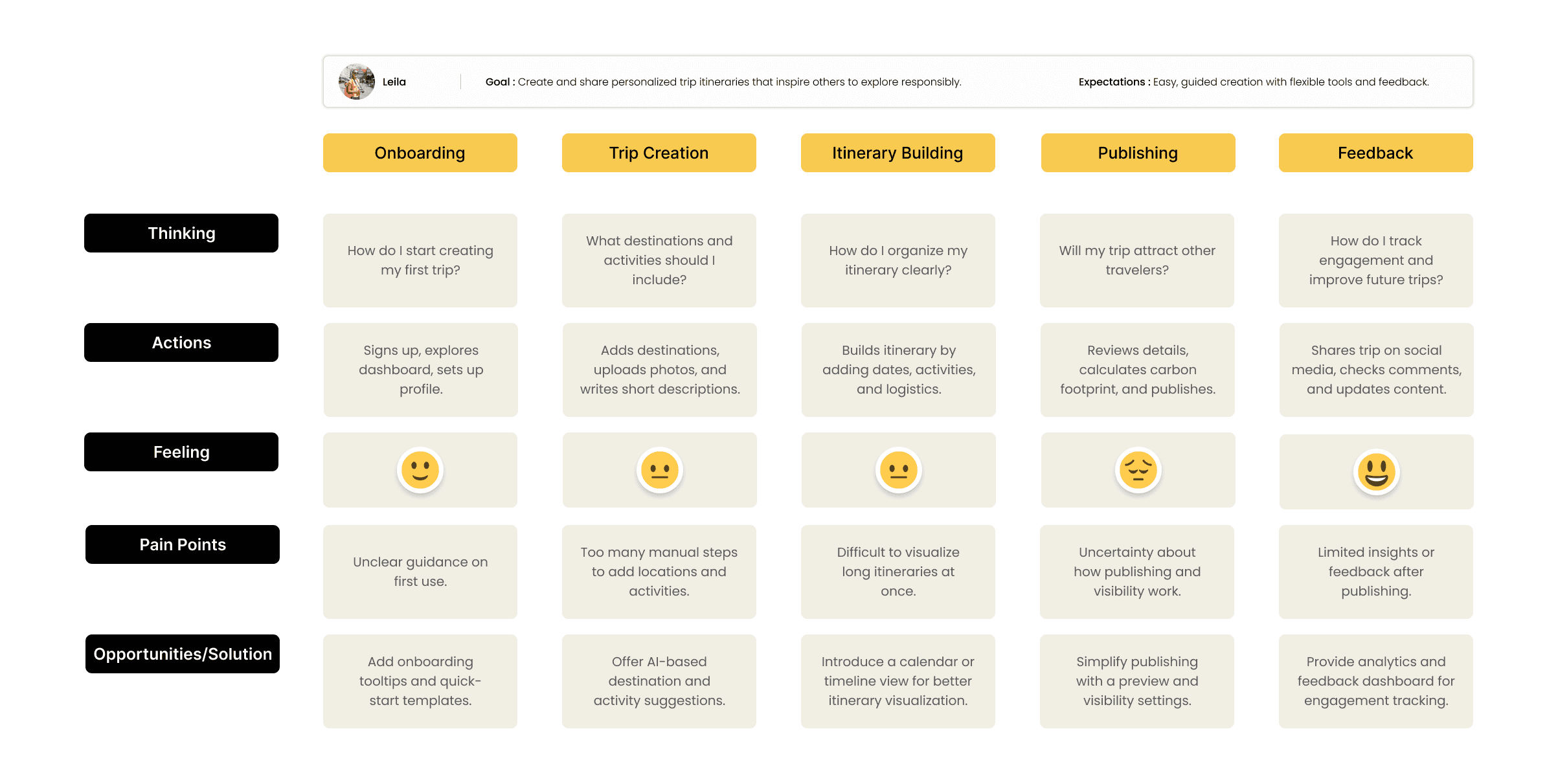
Conducted competitor benchmarking and traveler interviews. Key insight: many travelers wanted trips to feel authentic and impactful, not generic.
02.
Define & Ideate
Mapped user flows across discovery, planning, booking, and sharing. Prioritized features that balance convenience with purpose, such as curated trips and community visibility.
03.
Design Solution
With a research-backed approach, Created high-fidelity designs and interactive prototypes for core modules, dashboards, and site interfaces, ensuring a seamless, visually consistent, and user-friendly experience across the platform.
04.
Test & Iterate
Ran usability tests with travelers. Simplified planner navigation, improved booking transparency, and added labels for eco-friendly and community-based experiences.
[Solution]
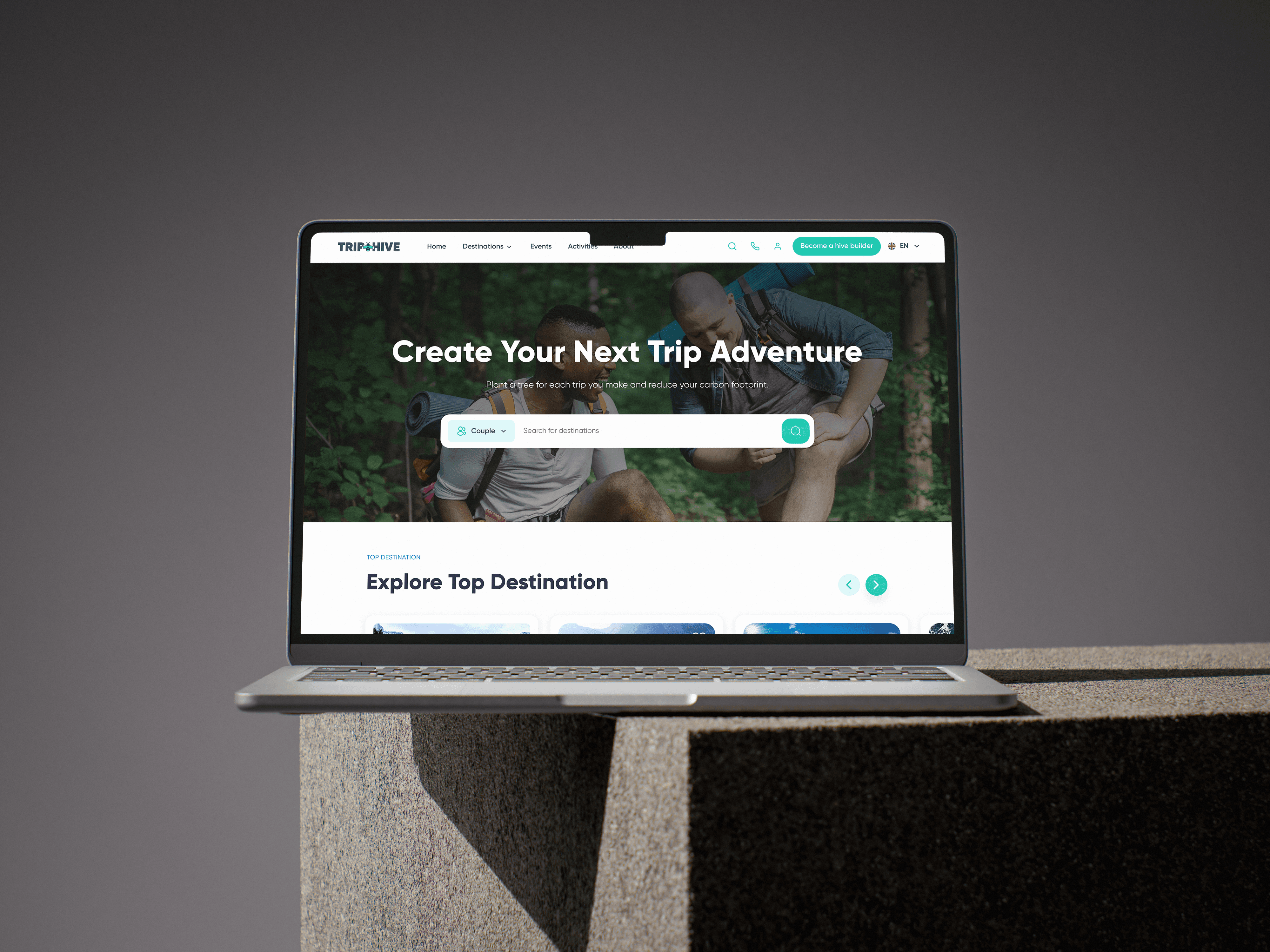
We created a seamless, user-focused platform designed to simplify travel while promoting sustainability, community engagement, and meaningful experiences.
Discovery Hub
Booking Flow
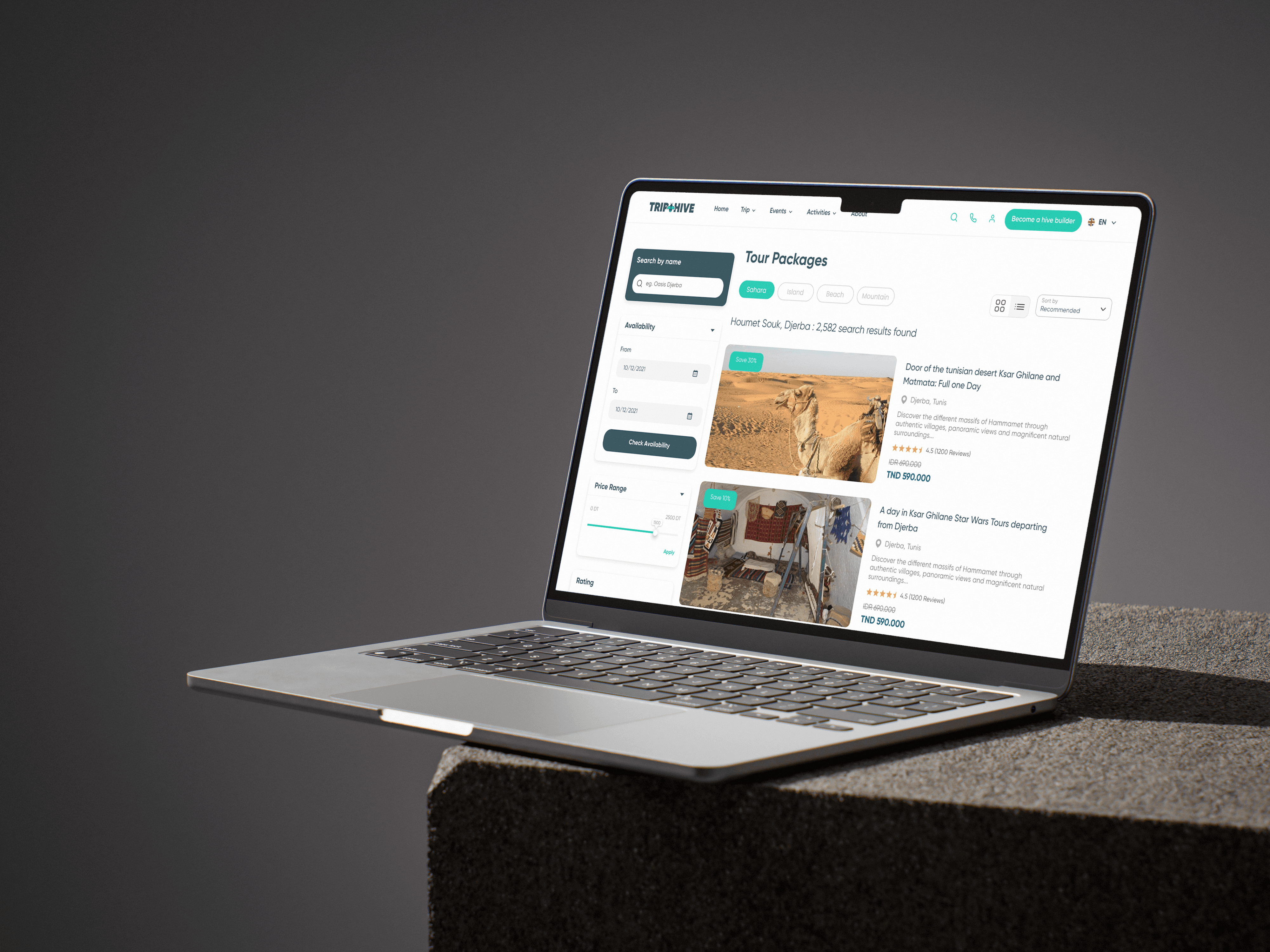
Seamless integration of trips, activities, events and experiences with clear pricing and confirmations.
Curated trips and thematic collections such as adventure, cultural, and eco-travel. Users can save favorites and explore community-generated journeys.
Trip Planner
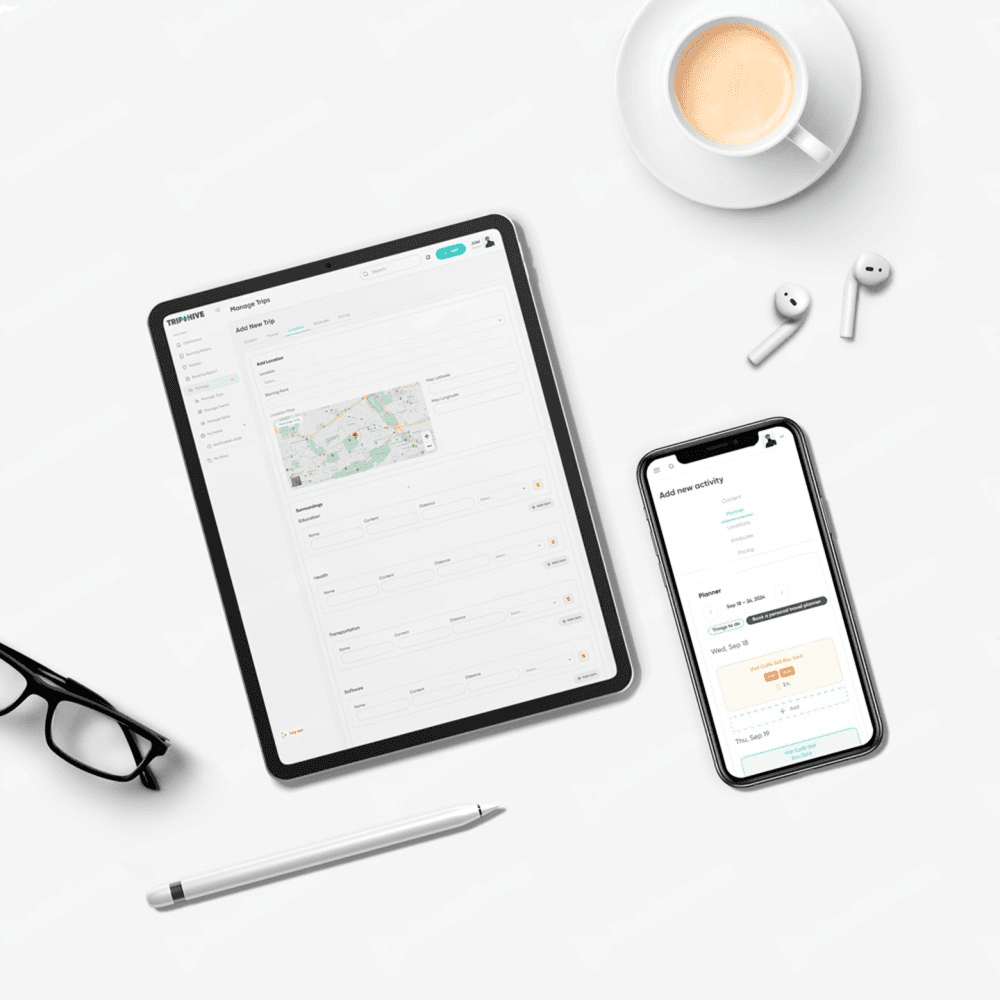
An intuitive dashboard for structuring days, adding activities, and organizing logistics efficiently. Sustainability indicators are incorporated within the planner to guide eco-conscious choices.
Multi-Role Dashboards
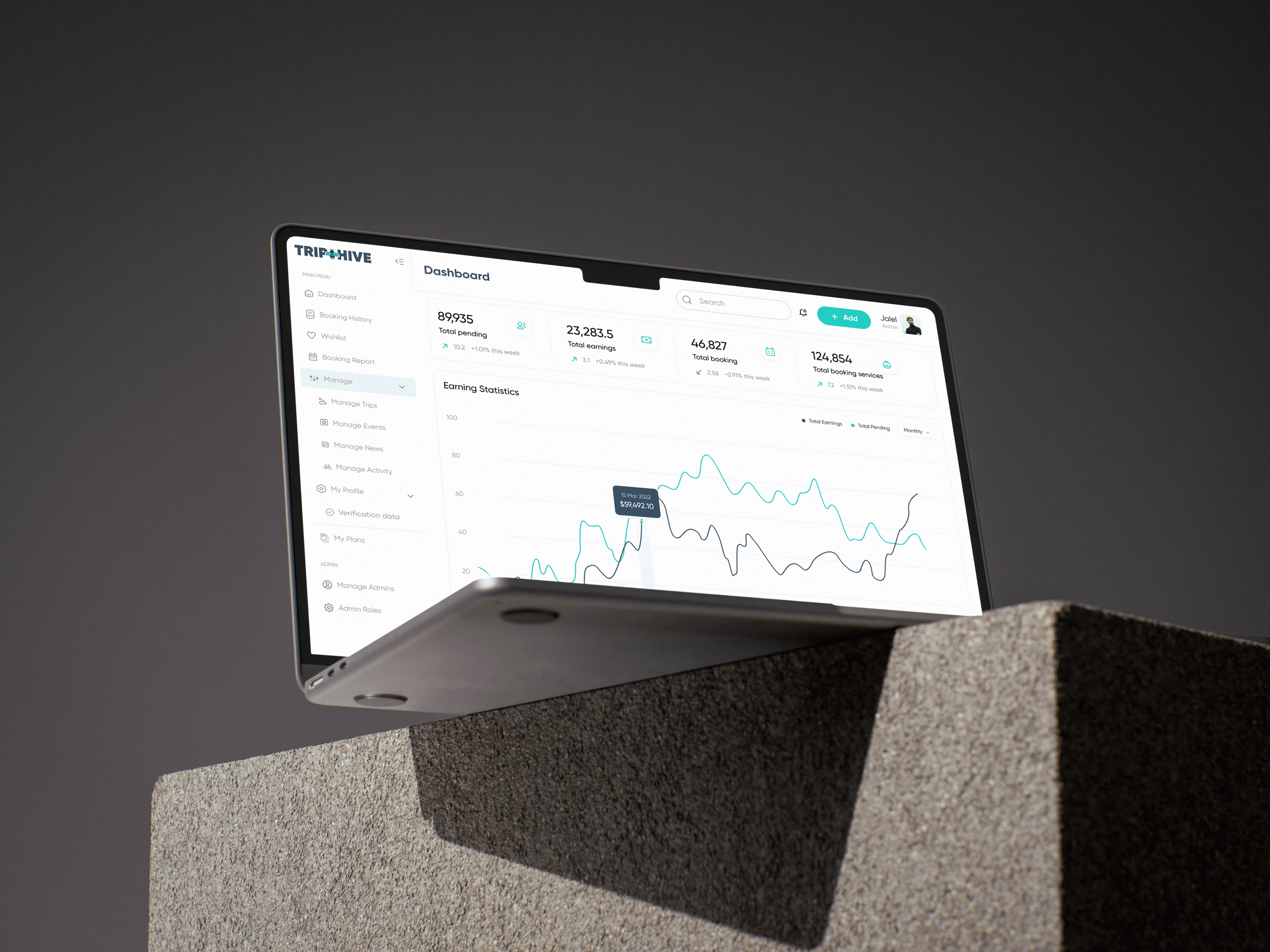
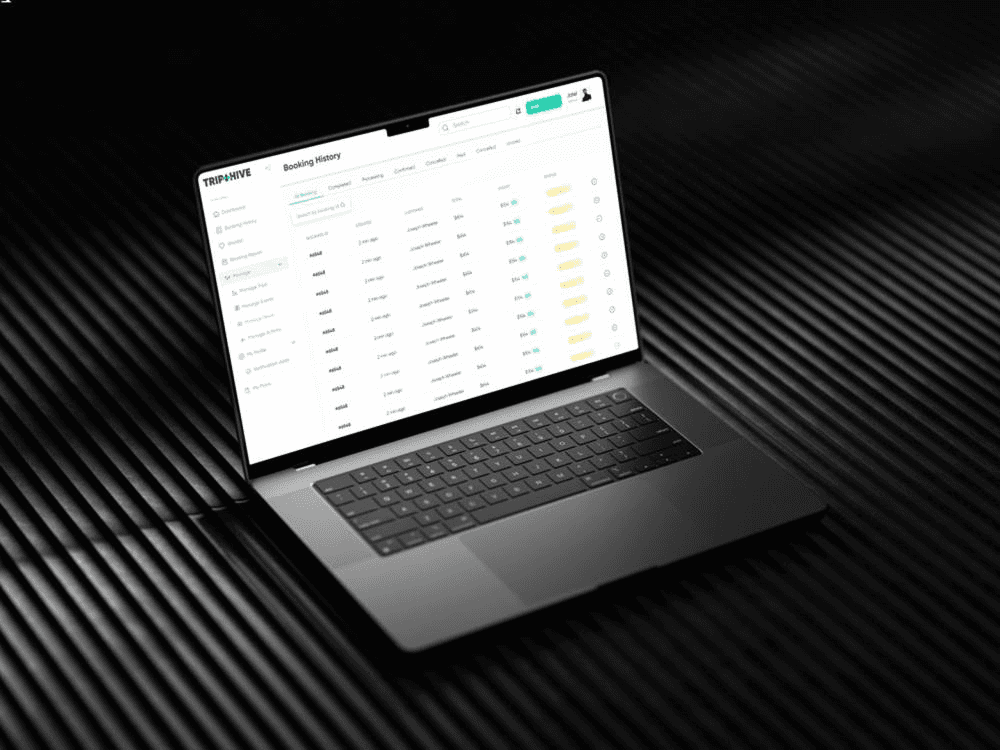
Custom dashboards for builders, users, and admins, giving full control over trip creation, management, and tracking.
Sustainability Initiatives
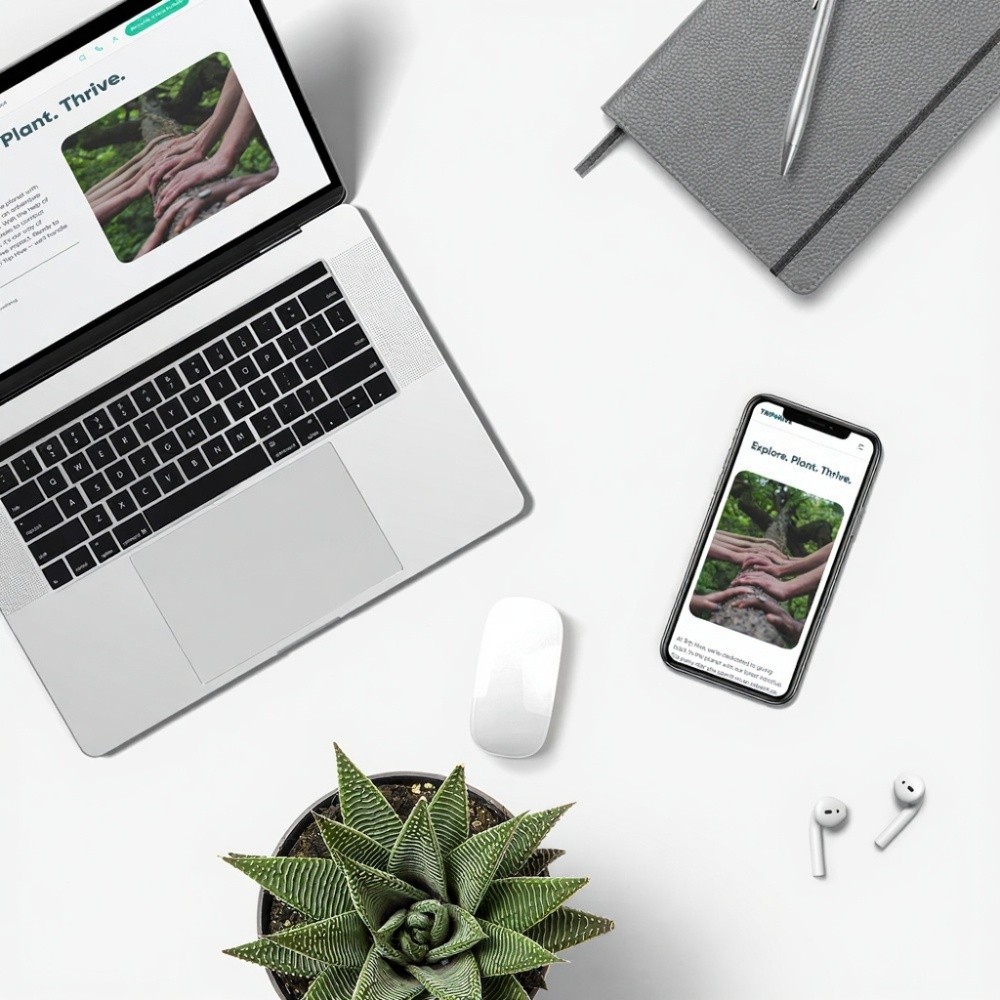
Integrated features encourage eco-friendly travel, such as planting trees for certain trips, supporting local communities, and tracking carbon footprint reductions.
[Outcome]
Average trip planning time reduced by 30% compared to traditional methods.
Early testers successfully completed discovery, planning, and booking in a single session, showing the platform’s usability.
Users appreciated eco-friendly options and tree-planting initiatives, with feedback indicating motivation to choose greener activities.
[Key Learnings]
Simplification is key
Users value a quick and easy process.
Iterative testing pays off
Regular testing uncovered hidden issues and ensured the design met user needs.
Designing for Roles
Role-based dashboards empower users with tailored control.
[Mockups]
[Journey Map]
[Usability Test]
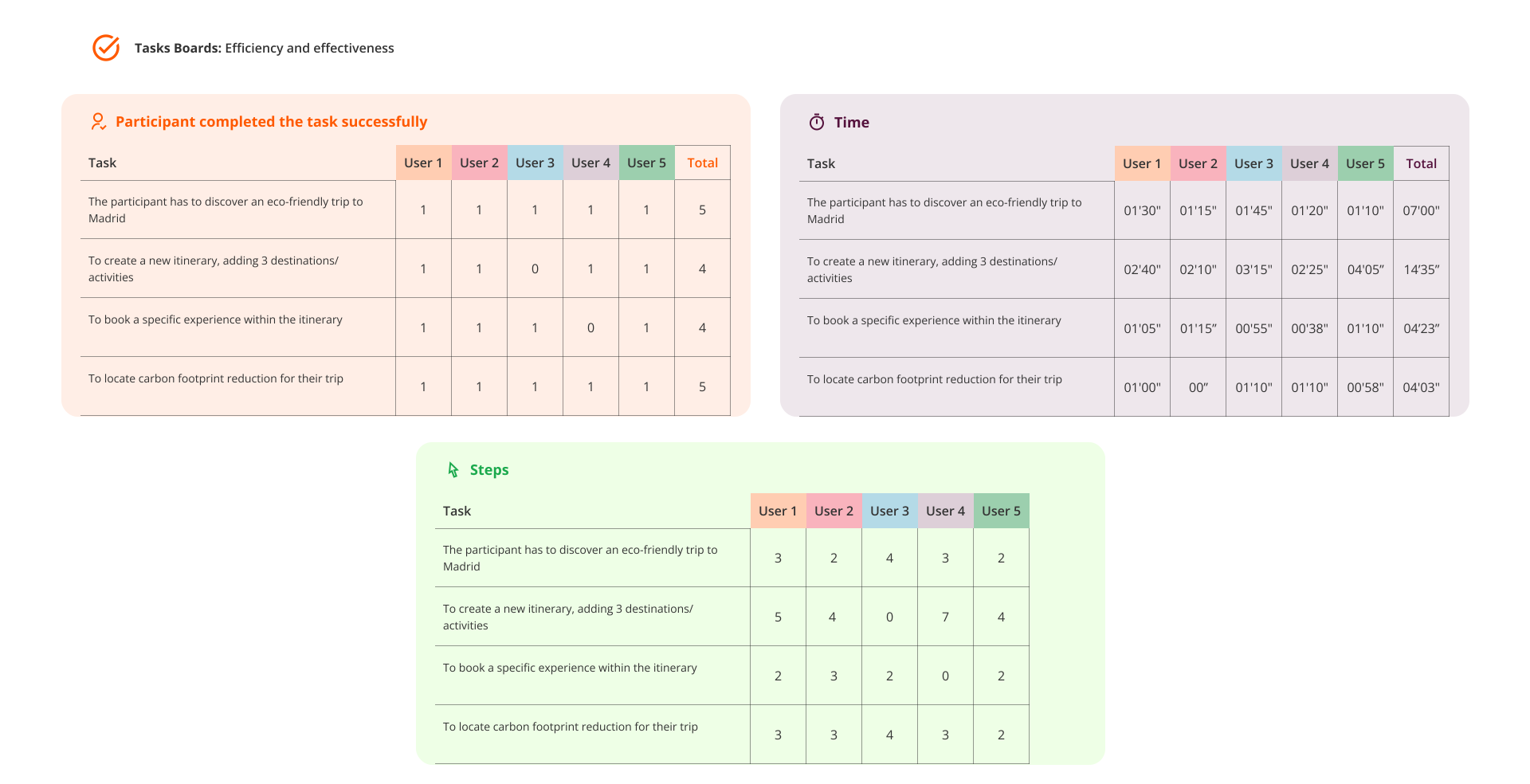
I conducted remote usability tests with five participants (ages 25–35) who regularly plan trips online. The goal was to assess the clarity, efficiency, and satisfaction of completing key travel-planning tasks using the Trip Hive prototype. Sessions were performed via Figma interactive prototype, with each participant sharing feedback as they navigated.
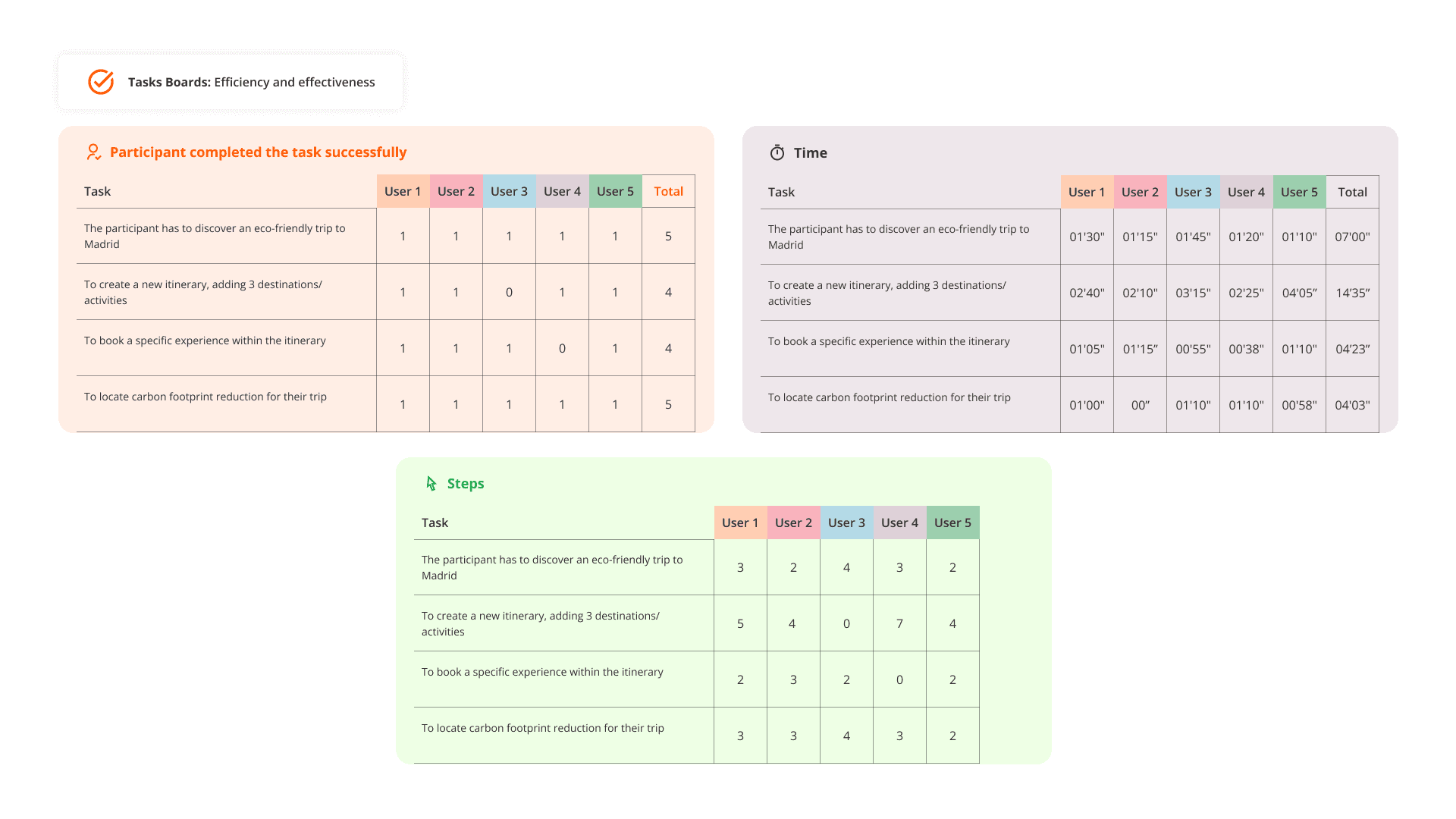
Task completion rate averaged 90%, showing a clear and efficient flow.
Average completion time ranged between 1–3 minutes per task.
The “create itinerary” flow required the most steps and time, indicating moderate complexity.
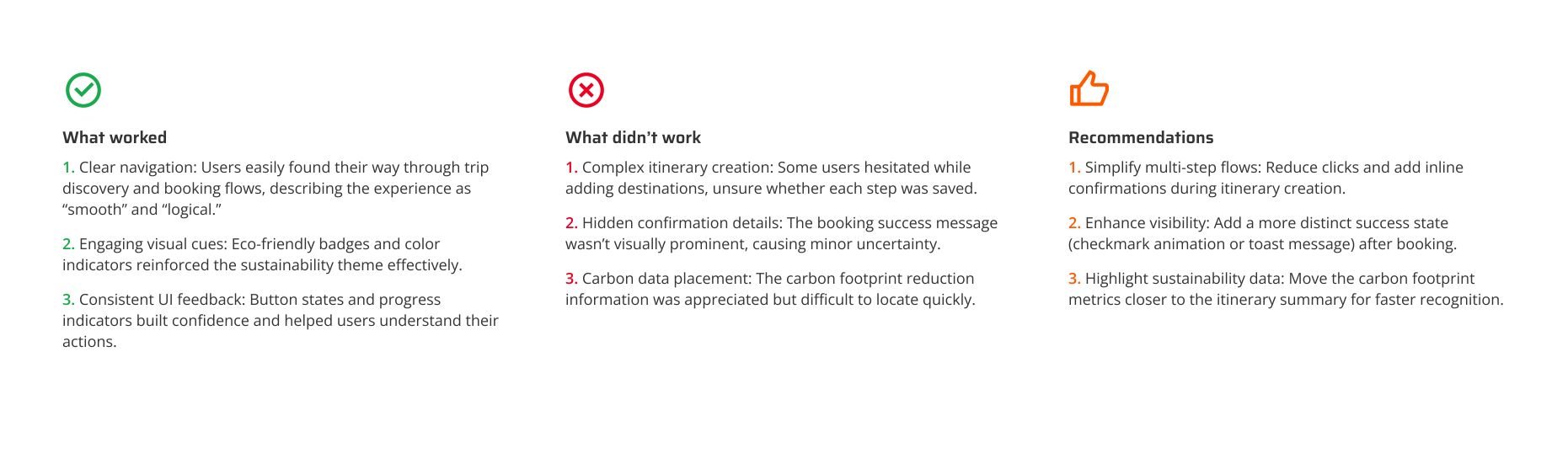
Users easily located eco-friendly indicators and appreciated their visibility.
Minor confusion occurred during the booking confirmation step.
(see table below for detailed task efficiency and effectiveness results)
Key insights:
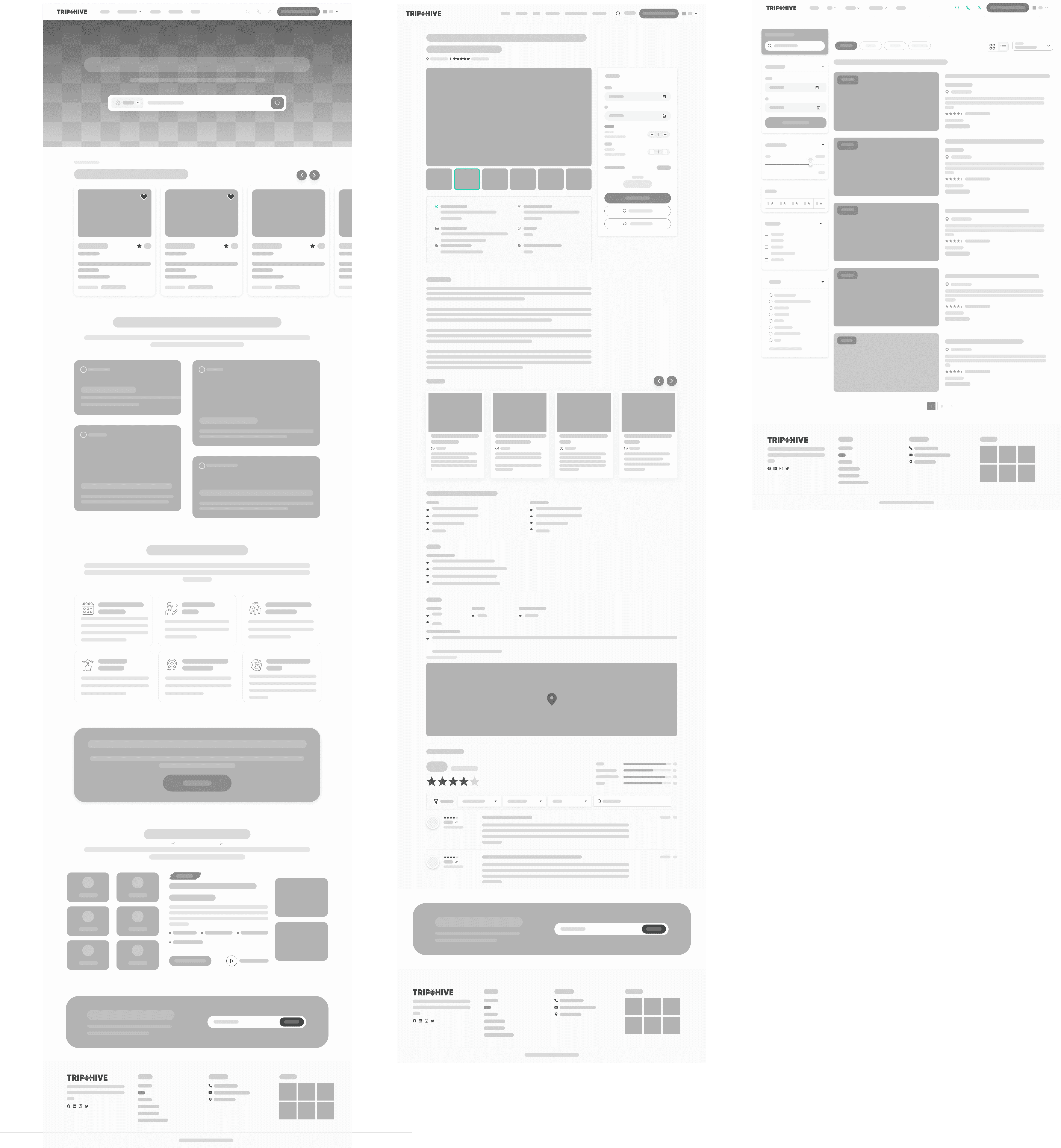
[Low Fidelity Prototype]
[Case 03]
Designing a Purpose-Driven Travel Platform
Travel
Project Description
Trip Hive is more than just a travel platform. It’s a community that connects hearts, cultures, and purpose. Designed to help travelers discover authentic destinations, plan meaningful journeys, book with confidence, and share experiences, Trip Hive stands out by combining seamless functionality with a mission for positive impact. As the UX/UI designer, I was responsible for shaping an experience that is not only user-friendly but also aligned with the platform’s values of sustainability, authentic connections, community empowerment, and trust.
Timeline
From explorations to final designs in 2 months while
working with multiple projects at the same time.
Background
Traditional travel planning is fragmented. Travelers look for inspiration on blogs or Instagram, book across multiple websites, organize itineraries in spreadsheets, and share plans through chats. This creates confusion, inefficiency, and frustration. Trip Hive solves this by unifying the process: offering curated discovery, easy itinerary planning, seamless booking, and the ability to share journeys with friends or the wider community. The platform also ensures every journey contributes positively by prioritizing sustainability, genuine relationships, community empowerment, and safety.
[Persona]
Name: Sara Ben Jemaa
Age: 29
Location: La Marsa, Tunisia
Occupation: Marketing Specialist
Gender: Female
Goal
Discover new destinations with trustworthy recommendations
Plan and organize trips without using multiple tools
Book experiences directly in one platform
Share her trip with friends or community members
Frustrations
Generic and impersonal booking platforms.
Switching between multiple tools for one trip.
Lack of transparency on how tourism supports local communities.
No simple way to share detailed itineraries.
[Process]
01.
User Research
Conducted competitor benchmarking and traveler interviews. Key insight: many travelers wanted trips to feel authentic and impactful, not generic.
02.
Define & Ideate
Mapped user flows across discovery, planning, booking, and sharing. Prioritized features that balance convenience with purpose, such as curated trips and community visibility.
03.
Design Solution
With a research-backed approach, Created high-fidelity designs and interactive prototypes for core modules, dashboards, and site interfaces, ensuring a seamless, visually consistent, and user-friendly experience across the platform.
04.
Test & Iterate
Ran usability tests with travelers. Simplified planner navigation, improved booking transparency, and added labels for eco-friendly and community-based experiences.
[Solution]
Curated trips and thematic collections such as adventure, cultural, and eco-travel. Users can save favorites and explore community-generated journeys.
Discovery Hub
From explorations to final designs in 5 weeks while working
with multiple projects at the same time.
Booking Flow
Seamless integration of trips, activities, events and experiences with clear pricing and confirmations.
Trip Planner
An intuitive dashboard for structuring days, adding activities, and organizing logistics efficiently. Sustainability indicators are incorporated within the planner to guide eco-conscious choices.
Multi-Role Dashboards
Custom dashboards for builders, users, and admins, giving full control over trip creation, management, and tracking.
Sustainability Initiatives
Integrated features encourage eco-friendly travel, such as planting trees for certain trips, supporting local communities, and tracking carbon footprint reductions.
[Outcome]
Average trip planning time reduced by 30% compared to traditional methods.
Early testers successfully completed discovery, planning, and booking in a single session, showing the platform’s usability.
Users appreciated eco-friendly options and tree-planting initiatives, with feedback indicating motivation to choose greener activities.
[Mockups]
[Key Learnings]
Simplification is key
Users value a quick and easy process.
Iterative testing pays off
Regular testing uncovered hidden issues and ensured the design met user needs.
Designing for Roles
Role-based dashboards empower users with tailored control.
[Journey Map]
[Usability Test]
I conducted remote usability tests with five participants (ages 25–35) who regularly plan trips online. The goal was to assess the clarity, efficiency, and satisfaction of completing key travel-planning tasks using the Trip Hive prototype. Sessions were performed via Figma interactive prototype, with each participant sharing feedback as they navigated.
Key insights:
Task completion rate averaged 90%, showing a clear and efficient flow.
Average completion time ranged between 1–3 minutes per task.
The “create itinerary” flow required the most steps and time, indicating moderate complexity.
Users easily located eco-friendly indicators and appreciated their visibility.
Minor confusion occurred during the booking confirmation step.
(see table below for detailed task efficiency and effectiveness results)
[Low Fidelity Prototype]
[Case 03]
Designing a Purpose-Driven Travel Platform
Travel
Project Description
Trip Hive is more than just a travel platform. It’s a community that connects hearts, cultures, and purpose. Designed to help travelers discover authentic destinations, plan meaningful journeys, book with confidence, and share experiences, Trip Hive stands out by combining seamless functionality with a mission for positive impact. As the UX/UI designer, I was responsible for shaping an experience that is not only user-friendly but also aligned with the platform’s values of sustainability, authentic connections, community empowerment, and trust.
Timeline
From explorations to final designs in 2 months while working with multiple projects at the same time.
The problem
Traditional travel planning is fragmented. Travelers often struggle to find authentic experiences that are both enriching and responsible, while local guides and communities face challenges in reaching the right audience and generating sustainable impact. Trip Hive aims to bridge this gap by creating a platform that balances discovery, convenience, and positive social and environmental outcomes.
Opportunity
Create a single, trustworthy platform where travelers can discover, plan, and book sustainably, while connecting with a like-minded community.
[Persona]
Name: Sara Ben Jemaa
Age: 29
Location: La Marsa, Tunisia
Occupation: Marketing Specialist
Gender: Female
Goal
Discover new destinations with trustworthy recommendations
Plan and organize trips without using multiple tools
Book experiences directly in one platform
Share her trip with friends or community members
Frustrations
Generic and impersonal booking platforms.
Switching between multiple tools for one trip.
Lack of transparency on how tourism supports local communities.
No simple way to share detailed itineraries.
[Journey Map]
[Process]
01.
User Research
I conducted interviews with 4 avid travelers to understand how they plan trips and what frustrates them most. Insights revealed that users value inspiration and flexibility but feel overwhelmed switching between tools.
02.
Define & Ideate
From research themes, I framed the main problem: “How might we streamline trip planning while reinforcing sustainable choices?” Brainstorming sessions led to concepts around curated collections, collaborative planning, and eco-impact tracking.
03.
Design Solution
With a research-backed approach, Created high-fidelity designs and interactive prototypes for core modules, dashboards, and site interfaces, ensuring a seamless, visually consistent, and user-friendly experience across the platform.
04.
Test & Iterate
Ran usability tests with travelers. Simplified planner navigation, improved booking transparency, and added labels for eco-friendly and community-based experiences.
[Solution]
Curated trips and thematic collections such as adventure, cultural, and eco-travel. Users can save favorites and explore community-generated journeys.
Discovery Hub
Curated trips and thematic collections such as adventure, cultural, and eco-travel. Users can save
favorites and explore community-generated journeys.
Booking Flow
Streamlined checkout with transparent pricing and carbon offset suggestions.
Trip Planner
An intuitive dashboard for structuring days, adding activities, and organizing logistics efficiently. Sustainability indicators are incorporated within the planner to guide eco-conscious choices.
Multi-Role Dashboards
Custom dashboards for builders, users, and admins, giving full control over trip creation, management, and tracking.
Sustainability Initiatives
Integrated features encourage eco-friendly travel, such as planting trees for certain trips, supporting local communities, and tracking carbon footprint reductions.
[Usability Test]
I conducted remote usability tests with five participants (ages 25–35) who regularly plan trips online. The goal was to assess the clarity, efficiency, and satisfaction of completing key travel-planning tasks using the Trip Hive prototype. Sessions were performed via Figma interactive prototype, with each participant sharing feedback as they navigated.
Key insights:
Task completion rate averaged 90%, showing a clear and efficient flow.
Average completion time ranged between 1–3 minutes per task.
The “create itinerary” flow required the most steps and time, indicating moderate complexity.
Users easily located eco-friendly indicators and appreciated their visibility.
Minor confusion occurred during the booking confirmation step.
(see table below for detailed task efficiency and effectiveness results)
[Low Fidelity Prototype]
[Mockups]
[Outcome]
Average trip planning time reduced by 30% compared to traditional methods.
Early testers successfully completed discovery, planning, and booking in a single session, showing the platform’s usability.
Users appreciated eco-friendly options and tree-planting initiatives, with feedback indicating motivation to choose greener activities.
[Key Learnings]
Simplification drives clarity
reducing cognitive load led to higher completion rates.
Iterative testing pays off
Regular testing uncovered hidden issues and ensured the design met user needs.
Designing for Roles
tailored dashboards improved engagement and understanding.